
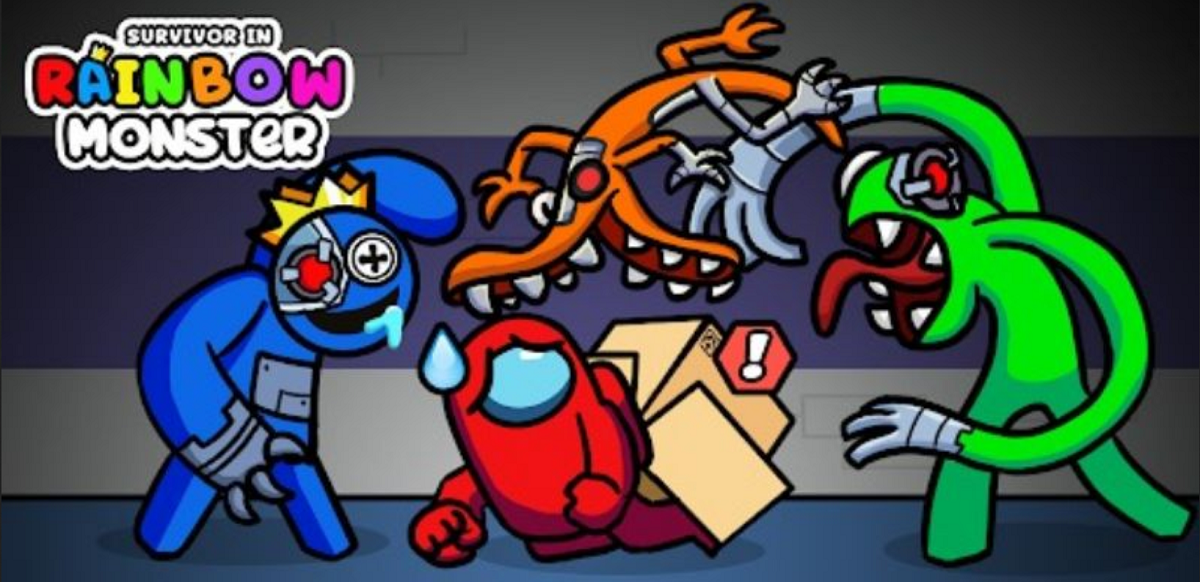

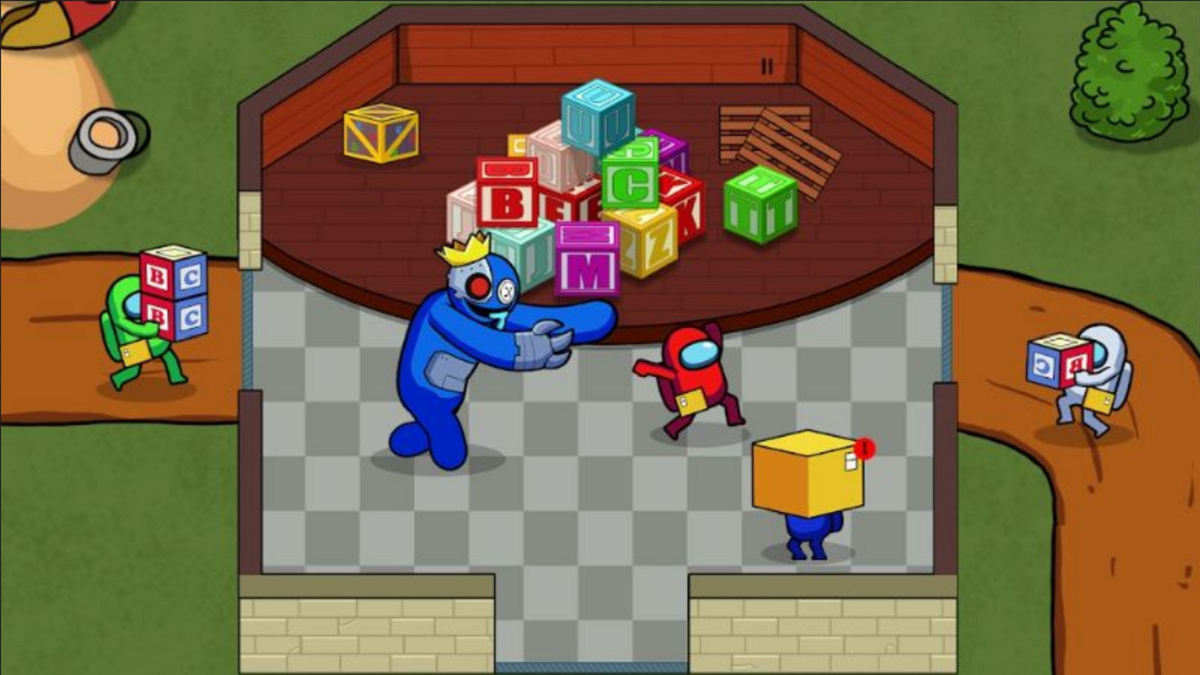
A friend sent me a clip of someone getting stomped by a giant blue crewmate looking monster and asked if I knew what it was. I did not, at first. A few sessions later I understood why the clip had gotten passed around: Survivor In Rainbow Monster is one of those games that looks simple in a screenshot and then quietly demands actual attention once the blue monster starts chuckling somewhere off screen. This piece is less of an introduction and more of a working strategy breakdown, built around the mistakes I made and the habits that fixed them.
Why This Game Rewards Patience Over Reflexes
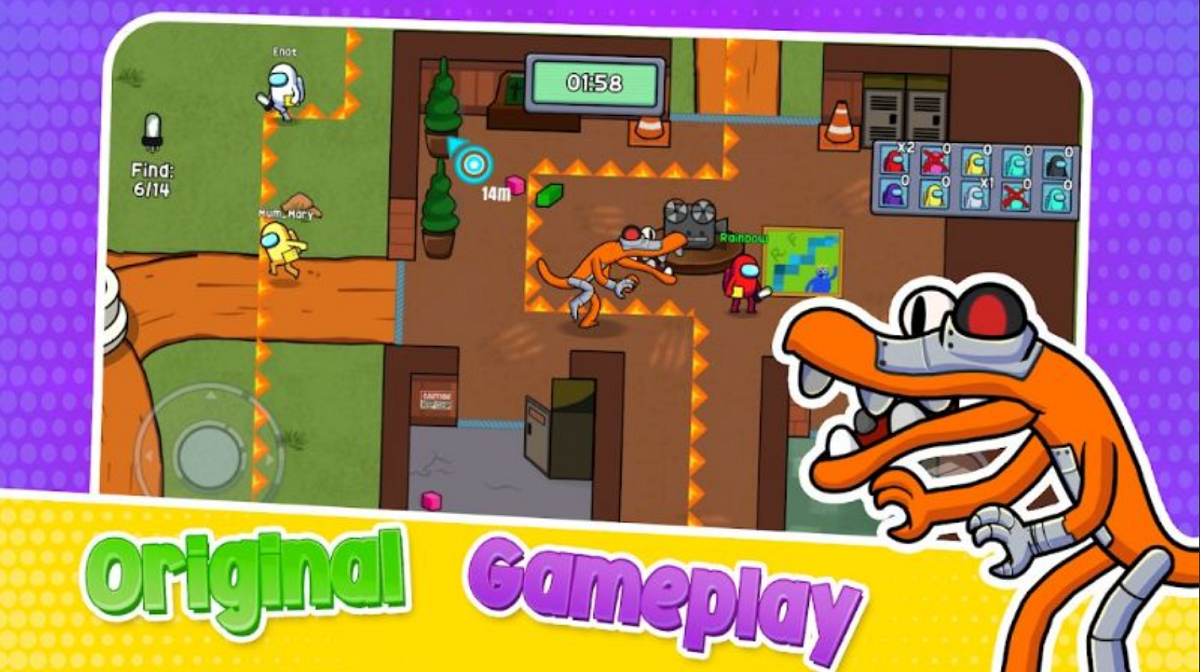
A lot of chase based mobile games reward fast thumbs. Survivor In Rainbow Monster does not, at least not primarily. The monsters in Spooky Park each rely on a specific detection method, sound, sight, territory, or ambush, and understanding which one applies in a given room matters far more than how quickly you can tap the screen. According to the game’s own official description on Google Play, the four Rainbow Monster types are blue, green, orange, and purple, and each behaves differently rather than being palette swapped copies of one another.Per the official Google Play listing
That distinction changes how you should approach the game. Sprinting through Spooky Park like it is an endless runner gets you caught by the green monster, which tracks sound rather than sight.Confirmed on the official listing Standing still too long near a vent gets you caught by the purple monster instead.Described on Aptoide’s game page The correct playstyle shifts room to room, and learning that shift is really the entire skill of the game.
The Setup, Briefly
You play an unnamed child kidnapped during a school trip and taken to an abandoned amusement park called Spooky Park, where you must survive five nights, each with its own objective, while avoiding the Rainbow Monsters that patrol the grounds.As stated in the official game description The mobile release comes from developer Bin Studio, with Great Arcade Games handling the mobile publishing.Per GamesGames’ developer credit page If you want the full story and mission breakdown, that groundwork is worth knowing before diving into strategy, but the short version above is enough context for what follows.
Reading Monster Behavior Room by Room
Open Pathways: Watch For The Blue Monster
Wide open trails and central park areas are blue monster territory. This is the monster the developer directly labels as the scariest in the game, and it earns that through active pursuit rather than passive patrolling.Stated in the official description It wanders broadly searching for players, and its arrival is telegraphed by stomping footsteps and chuckling before it is visible on screen.
My working rule in open areas is to never cross more than half the visible screen distance without a box or locker in sight. That sounds overly cautious, and it is, but the blue monster’s chase speed once it spots you is fast enough that reacting after you see it is usually too late.
Narrow Corridors and Patrol Loops: The Green Monster’s Ground
The green monster covers wide patrol routes but cannot actually see, relying entirely on sound to locate players.Per the official Play Store page This flips the usual chase game logic on its head. In most games, standing still in the open near an enemy is the dangerous move. Here, standing still and staying quiet is often safer than sprinting away, because sprinting is what actually draws the green monster’s attention in the first place.
The practical habit is walking, not running, whenever the green monster’s territory overlaps your path, and giving it a wide loop rather than trying to slip past close and fast.
Marked Zones: The Orange Monster’s Routine
The orange monster stays inside boundaries marked on the map, usually shown with an orange line, and does not chase beyond that zone. Its behavior is tied to hunger rather than direct detection, which becomes especially relevant during night two, when feeding it regularly keeps it calm.
Once you understand this monster is territorial rather than roaming, it stops being a threat you avoid and becomes one you manage. Feed it early, feed it often during night two, and it mostly stays out of your way for the rest of the run.
Vents and Enclosed Rooms: Where The Purple Monster Waits
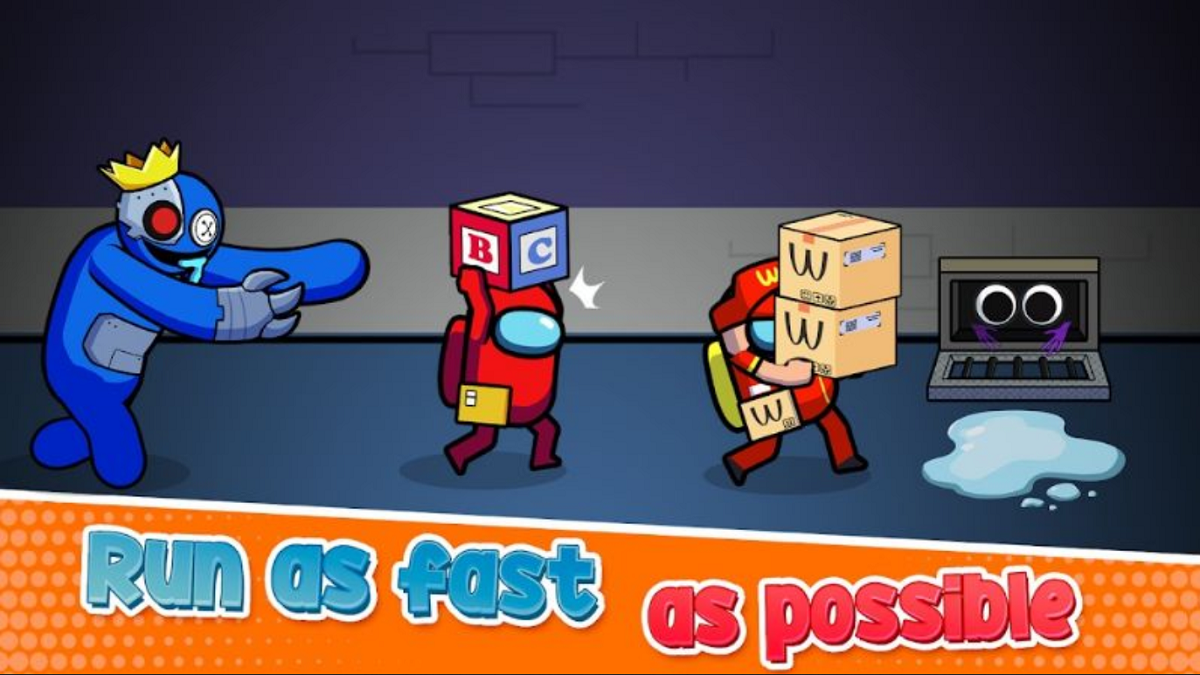
Unlike the other three, the purple monster does not patrol at all. It hides inside vents, with only its eyes and hands visible through the opening, and waits for players to walk too close.Described on Aptoide’s listing This is the monster that catches confident players, specifically because there is no chase warning. You either notice the vent in time or you do not.
Check every vent opening before walking near it, especially on night three and four, when repair and lighting objectives naturally push you through enclosed mechanical rooms where this monster tends to hide.
A Deeper Look At Each Night’s Real Challenge
The mission names alone, find the blocks, feed the monsters, fix the machine, light the room, and mystery night, do not tell you what actually makes each night harder than the last.Night list per the official Google Play description Here is what changes structurally, not just narratively, from one night to the next.
Night 1 Is About Building Map Memory
The actual task, collecting lettered cube blocks, is easy. What night one is quietly testing is whether you are paying attention to where boxes, lockers, and vents are located while you walk between blocks. Players who treat night one as a formality tend to have no mental map by night three, when there is no time left to explore casually.
Night 2 Introduces Resource Management
Feeding the orange monster is not just a side objective, it is the first time the game asks you to manage a resource under time pressure instead of just avoiding a threat. Prioritize gathering food early in the night rather than after other objectives, since a hungry orange monster on top of an active blue or green monster search creates a much harder combination than either threat alone.
Night 3 Combines Objective Hunting With Ambush Risk
Machine repair sends you into enclosed rooms and near vents more than any previous night, putting you directly in purple monster territory while you are also trying to track down parts. This is the first night where multitasking, watching for an ambush while also searching, becomes mandatory rather than optional.
Night 4 Removes Your Shadows
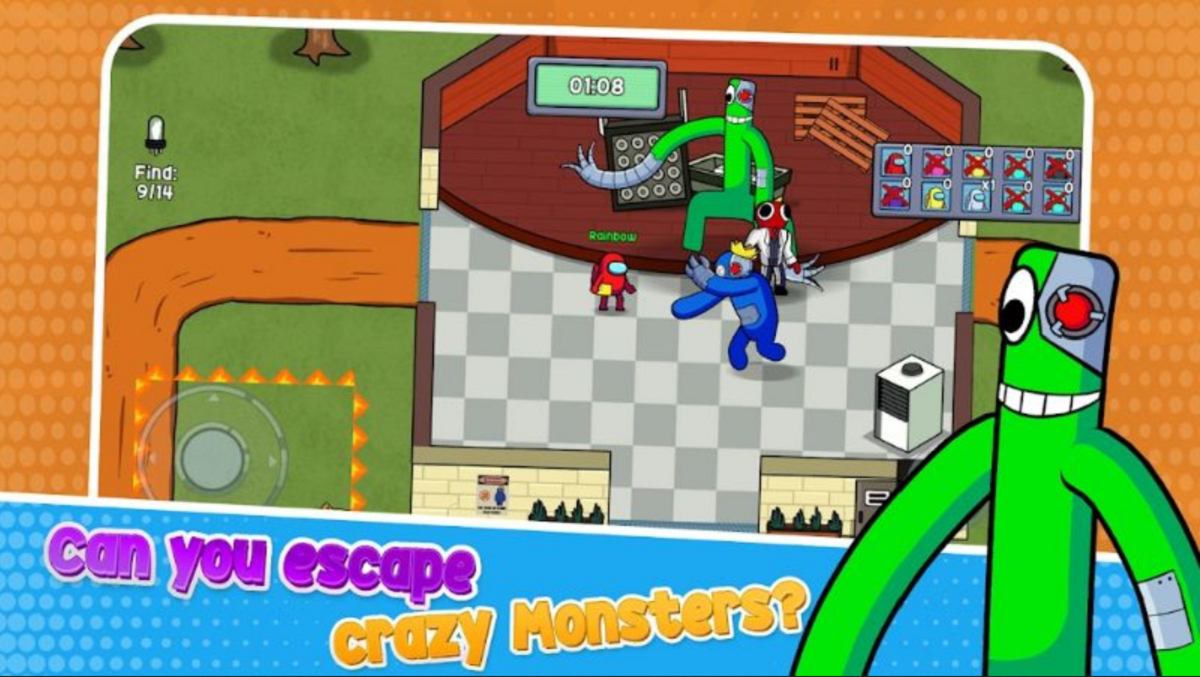
Lighting up rooms with the machine you repaired the night before cuts both ways. Illuminated areas make monsters easier to spot from a distance, but they also strip away the dim corners you might have relied on to break line of sight. Adjust your hiding strategy here toward boxes and lockers rather than shadows, since shadows stop being reliable cover once a room is lit.
Night 5 Tests Everything At Once
Mystery Night is listed as the final chapter in the official mission structure, and it plays like a culmination rather than a new mechanic.Confirmed on the official listing Every monster type is active, and the task itself requires the map awareness, resource management, and ambush avoidance built up over the previous four nights. Rushing this night almost never works. Slower, more deliberate movement consistently outperforms speed here.
Common Mistakes That Get Players Caught
- Running through green monster territory out of habit, even after learning that sound triggers its detection rather than sight.
- Ignoring audio cues because the phone is on silent or the game volume is muted, which removes the earliest warning for both the blue and green monsters.
- Walking past vents without checking them, particularly during night three and four when enclosed rooms become unavoidable.
- Saving orange monster feeding for later in night two instead of handling it early, which stacks a hungry monster on top of whatever else is happening on the map.
- Treating lit rooms on night four the same as dark rooms, and relying on shadow cover that no longer exists.
- Losing track of your own character in a crowd of similarly dressed players, despite the green name tag marking your avatar clearly on screen.
How Outfit Rewards Fit Into Strategy
Character skins in Survivor In Rainbow Monster are cosmetic only. Outfits like the white doctor style suit, the blue gymnastics uniform with a braided hairstyle, or the chef’s outfit with brown hair are unlocked by completing specific nightly tasks, but none of them change speed, stealth, or detection odds. They do not factor into strategy directly, though chasing a specific unlock can be a useful way to structure practice runs, since aiming for one outfit at a time gives newer players a concrete short term goal instead of just trying to survive indefinitely.
Solo Play Versus Shared Map Play
Because Spooky Park is shared space rather than a private instance, other kidnapped children controlled by other players will often be visible on your map during a run. This changes strategy slightly. Watching an experienced player’s movement can reveal safe routes around a monster’s territory faster than exploring blind, and warning nearby players about a monster’s location, even informally through movement, tends to benefit everyone involved. The core objectives and monster behavior remain identical whether you are playing among others or effectively alone on a quiet server, but the shared map does add a layer of unpredictability that a fully private survival game would not have.
Platform Differences Worth Knowing
The mobile version is distributed through the Google Play Store under developer Pioneer Studio, using the package identifier com.blue.monster.rainbow.impostor.Listed on the official Play Store page A browser based version also runs on HTML5 and WebGL without installation, hosted through Silvergames, which lists the game as suitable for players over six years old and notes an original release in May 2023 for that build.Per Silvergames’ game information page A separate web release is dated to April 20, 2023 on GamesGames.According to GamesGames’ release date listing
For strategy purposes, the mobile version is the one worth committing to if you plan on playing past a single session, mainly because progress and outfit unlocks persist more reliably there than in some browser instances, which can reset between visits depending on the site.
A Simple Way To Practice Each Monster Type Individually
One habit that helped me more than anything else was treating early nights as isolated practice rather than trying to master all four monsters at once. On night one, focus entirely on learning the blue monster’s sound cue and chase range, since it is the most present threat in open areas. On night two, shift attention to the orange monster’s feeding routine while still applying what you learned about the blue monster. By night three, add purple monster vent checking into the mix. This layered approach turns what looks like an overwhelming four monster system into four separate, learnable habits stacked gradually instead of all at once.
Frequently Asked Questions
Which Rainbow Monster is the hardest to avoid?
Most players find the blue monster the most immediately dangerous because it actively searches wide open areas and moves quickly once it spots a player, a behavior the developer itself describes as the scariest in the game.Per the official description The purple monster is arguably harder to avoid consistently, since it gives no chase warning and relies entirely on players noticing it first.
Does running always increase the risk of getting caught?
Only around the green monster, whose detection is sound based rather than sight based.Confirmed on the official listing In open areas without the green monster nearby, movement speed does not carry the same risk.
Is there a way to permanently avoid the orange monster?
Not permanently, since it is tied to a specific zone during night two, but keeping it consistently fed keeps it calm and largely non threatening within its territory.
Do outfit unlocks affect gameplay?
No. They are cosmetic rewards for completing specific nightly tasks and do not change speed, stealth, or detection.
Is the game the same across mobile and browser versions?
The core mission structure and monster behavior are consistent, though the browser version hosted on Silvergames runs on HTML5 and WebGL and may not retain progress as reliably as the installed mobile version.Per Silvergames’ platform details
Survivor In Rainbow Monster rewards the kind of attention most fast paced mobile games actively discourage. Slowing down, listening for cues, and adjusting your approach room by room will get you further than reflexes alone. The five night structure is short enough to master without it feeling like a grind, and once you understand that each monster is really just a different rule set rather than a harder version of the last one, Spooky Park stops feeling random and starts feeling readable. That shift, from chaos to pattern, is honestly the most satisfying part of the whole game.
Sources